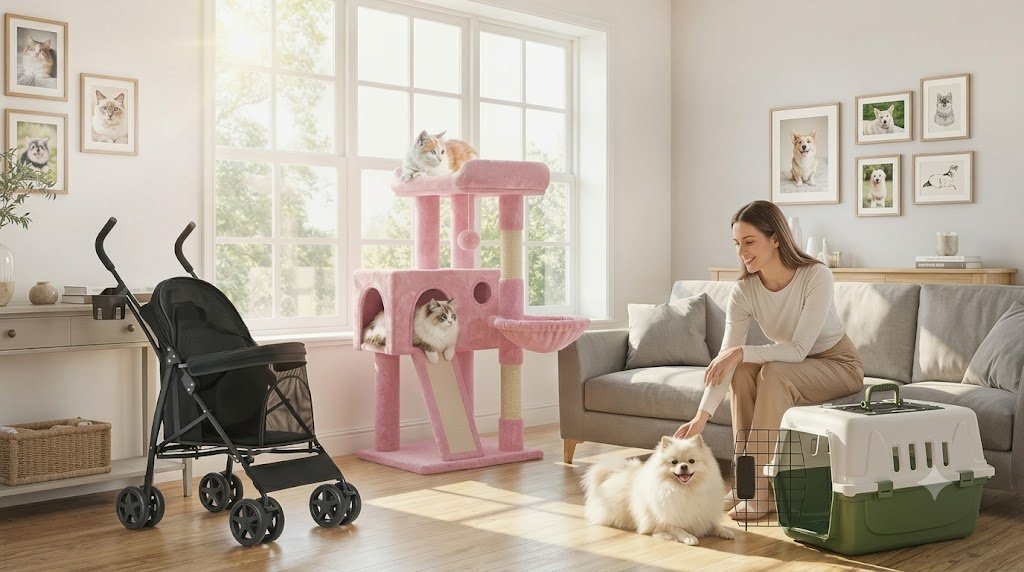
If you are sourcing pet travel products for your store, the pet stroller vs pet carrier debate is one of the first decisions you will face. Both categories sell well, but they serve different customer needs, carry different price points, and appeal to different buyer demographics. Choosing the wrong mix can leave you with slow-moving inventory — or worse, missed sales to competitors who understood the difference. This guide breaks down pet stroller vs pet carrier across use cases, profit margins, customer profiles, and regional demand, so you can stock with confidence.
What is a pet stroller — and who buys it?
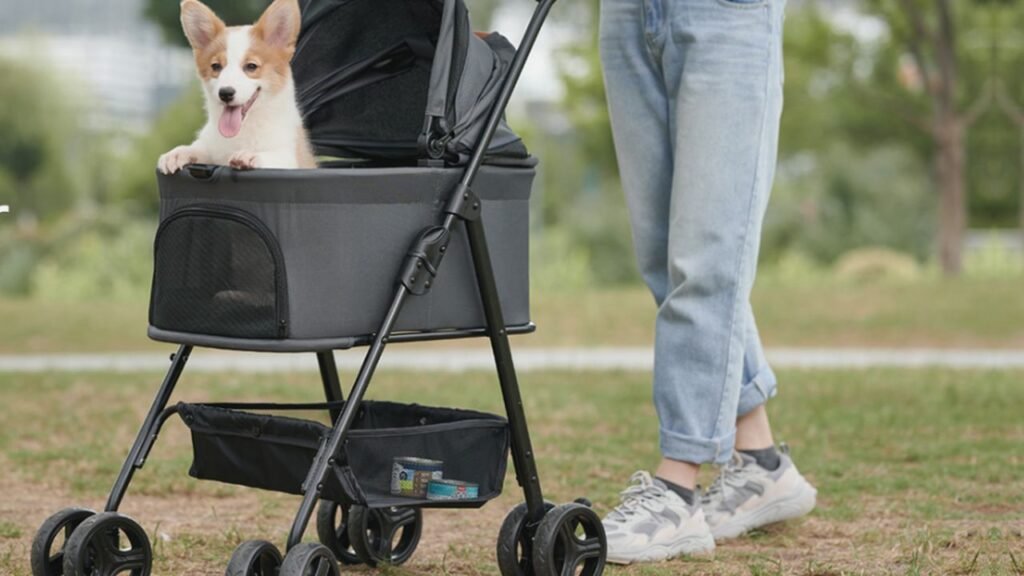
A pet stroller is a wheeled cart designed to transport pets comfortably while the owner walks behind. Most models feature a foldable steel frame, Oxford fabric cabin, mesh windows for ventilation, and swivel wheels for maneuverability. Pet strollers are popular among:
- Small dog and cat owners — Pets that tire easily on long walks or live in urban apartments with limited exercise space.
- Senior pet owners — Older dogs and cats with joint issues, arthritis, or mobility limitations.
- Post-surgery and special-needs pets — Veterinarians often recommend strollers for recovery periods.
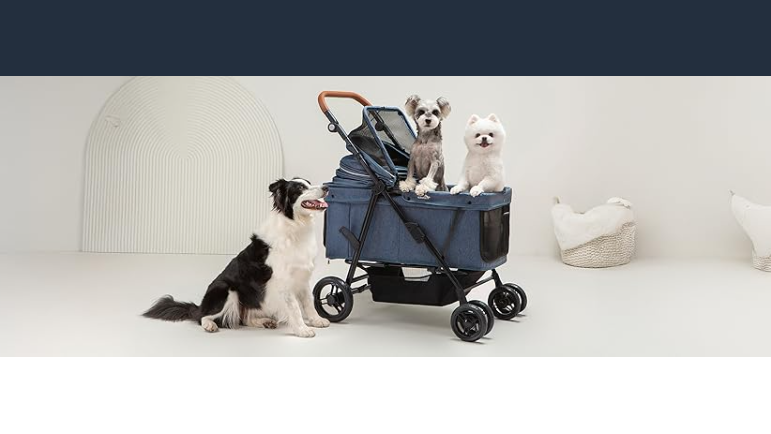
- Multi-pet households — Owners with multiple small pets use strollers to manage walks safely.
From a wholesale perspective, pet strollers offer higher average order value (AOV) than carriers — typically $25–$65 FOB per unit depending on features like one-click folding, detachable cabins, or heavy-duty frames. Our foldable pet stroller wholesale lineup includes models ranging from 4.45 kg ultra-lightweight designs to 80 kg load-capacity heavy-duty frames.
What is a pet carrier — and when does it win?
A pet carrier is a portable enclosed container — soft-sided or hard-shell — used to transport pets hands-free or in vehicles. Unlike strollers, carriers are worn (backpack-style), hand-carried, or secured in cars. Carriers dominate in:
- Veterinary visits and short trips — Carriers are the default choice for clinic visits and quick errands.
- Air travel — Airlines require airline-approved carriers for in-cabin pet transport; strollers cannot be used on planes.
- Public transit — Buses, subways, and trains often mandate that pets be enclosed in carriers.
- Small living spaces — Carriers double as a safe space or "den" for cats and small dogs at home.
Carriers typically retail at lower price points ($15–$40) compared to strollers, which means faster turnover but lower margin per unit. However, the carrier market is more saturated, making differentiation harder for wholesalers and retailers.
Pet stroller vs pet carrier: key differences at a glance
| Feature | Pet Stroller | Pet Carrier |
|---|---|---|
| Primary use | Outdoor walks, extended outings, mobility support | Short trips, vet visits, air travel, public transit |
| Transport method | Pushed on wheels — no lifting required | Carried by hand, shoulder strap, or backpack |
| Pet size range | Up to 80 kg — suitable for medium and large dogs | Typically under 10 kg — small dogs and cats only |
| Average FOB price | $25–$65 | $8–$25 |
| Profit per unit | Higher — premium positioning, less price competition | Lower — commoditized market, heavy price competition |
| Storage space | Folds flat — moderate shelf space needed | Compact — minimal shelf space, easy to stack |
| Airline approved | No | Yes (airline-approved models) |
| OEM/ODM potential | High — custom colors, logos, fabrics, frame finishes | Moderate — mostly color and logo customization |
Which product should wholesalers prioritize?
If your customer base leans toward premium pet boutiques, veterinary clinics, or specialty pet retailers, pet strollers offer stronger margins and less competition. The pet stroller category is growing faster — according to the American Pet Products Association (APPA), pet travel products have seen double-digit growth year-over-year, with strollers leading the segment.
If your customers are mass-market discount retailers, airport shops, or budget-conscious e-commerce stores, pet carriers provide faster inventory turnover at lower price points. However, the carrier market is crowded. To stand out, consider stocking carriers alongside strollers — many retailers find that bundling both categories increases average basket size.
Our recommendation: stock both, but lead with strollers. A typical retailer carrying 60% stroller SKUs and 40% carrier SKUs sees higher overall revenue per shelf foot. For a closer look at our stroller lineup, visit our pet stroller wholesale catalog — we carry models from ultra-lightweight folding designs to heavy-duty strollers for large dogs with 80 kg load capacity.
Regional demand: where each product sells best
- North America: Strollers dominate — U.S. and Canadian consumers spend heavily on pet mobility and wellness products. Carriers sell well as a secondary item for vet visits.
- Latin America: Strollers are a growing category as pet humanization trends spread across Mexico, Brazil, and Colombia. Carriers remain the budget entry point.
- Europe: Strong demand for both — strollers in Western Europe (Germany, France, UK), carriers in Eastern Europe where price sensitivity is higher.
- Middle East: Premium strollers sell well in UAE, Saudi Arabia, and Qatar — consumers prefer high-end features and are less price-sensitive.
- Southeast Asia: Carriers lead due to smaller living spaces and scooter-based transportation. Strollers are growing in urban centers.
The 2-in-1 solution: bridging the gap
One trend reshaping the pet stroller vs pet carrier conversation is the rise of 2-in-1 detachable pet strollers — products that combine a stroller frame with a removable carrier pod. These hybrid models let retailers address both customer needs with a single SKU. The carrier pod detaches for car trips and vet visits, while the stroller base handles outdoor walks. Our detachable 2-in-1 pet stroller wholesale model has become a top seller for multi-category retailers looking to consolidate inventory.
FAQ — Pet Stroller vs Pet Carrier for Wholesale Buyers
Pet stroller vs pet carrier — which has better profit margins for wholesale?
Pet strollers typically offer higher profit margins ($25–$65 FOB) compared to carriers ($8–$25 FOB). Strollers face less price competition and support premium positioning, while the carrier market is more commoditized with tighter margins.
Can a pet carrier replace a pet stroller for daily use?
No. Pet carriers require the owner to carry the full weight of the pet, making them impractical for long walks or medium-to-large dogs. Pet strollers allow the pet to ride comfortably while the owner pushes — ideal for daily outdoor use, senior pets, and multi-pet households.
Which pet stroller models sell fastest at wholesale?
Our fastest-moving wholesale models include one-click foldable strollers for convenience-driven buyers, detachable 2-in-1 strollers for versatility, and heavy-duty strollers for large-dog owners. Browse our full catalog at myeece.com/pet-products/.
Do I need to stock both pet strollers and pet carriers in my store?
We recommend stocking both, but leading with strollers at roughly a 60/40 ratio. Carriers capture the budget-conscious and travel-focused buyer, while strollers deliver higher revenue per unit. Together they cover the full range of pet travel needs your customers will ask for.
What is the MOQ for wholesale pet strollers and carriers at Myeece?
MOQ is negotiable based on your requirements. We support mixed-color orders and full OEM/ODM customization including logos, fabric colors, packaging design, and labeling. Contact us for a customized wholesale quote for your market.